A principle whose time has come
Few ideas in healthcare are more fundamental, or more deserving of our attention, than the recognition that the health of people, animals, and the environment cannot be considered in isolation.
Yet for generations, these fields have too often been approached separately. Human medicine, veterinary medicine, and environmental science developed their own disciplines, institutions, and priorities. Although each has made extraordinary contributions, the challenges confronting us today increasingly reveal the limits of working independently.
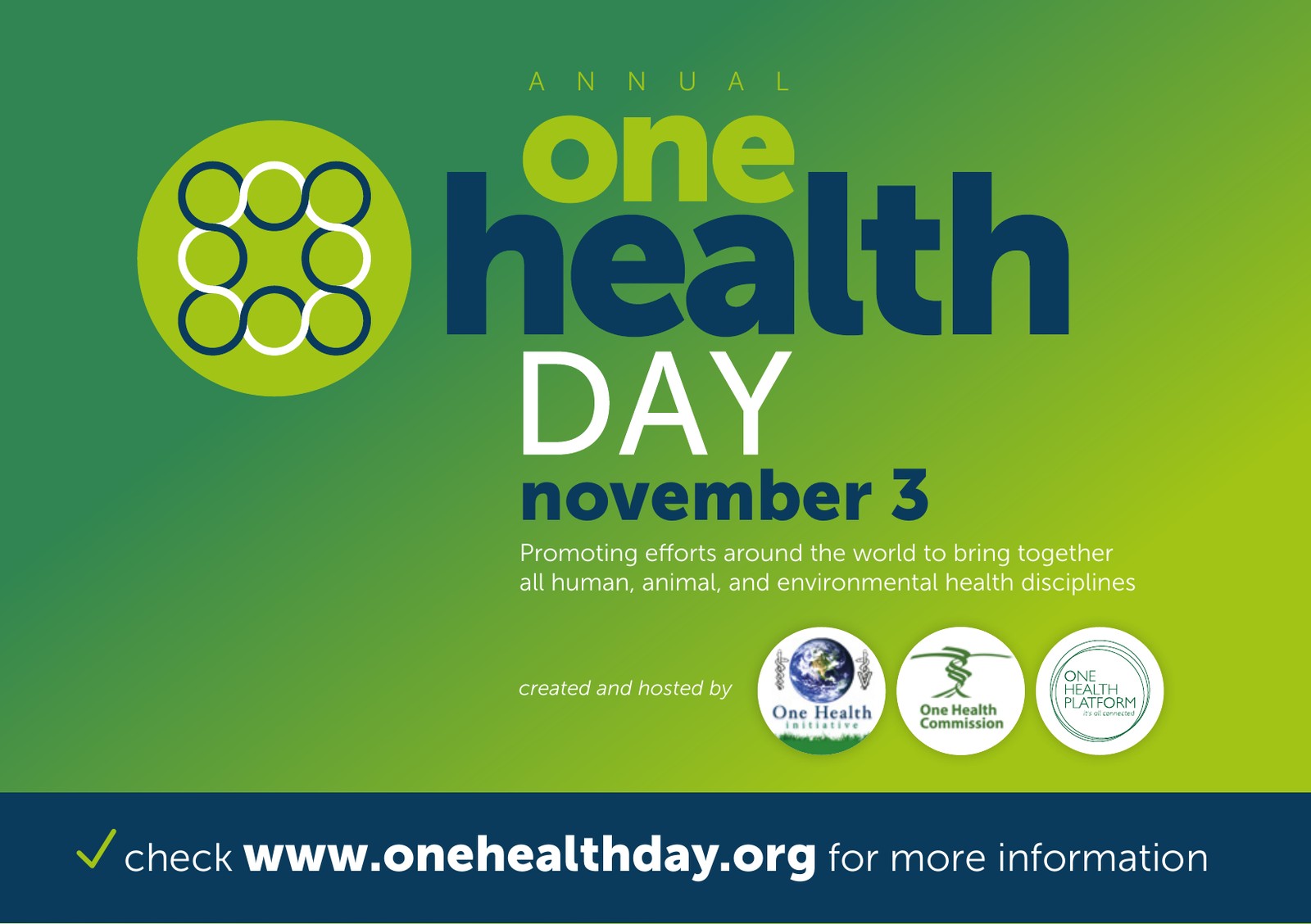
This is why November 3, One Health Day, holds such significance for us at The F.C. Sturtevant Company.
As longtime supporters of the One Health Initiative, we see this annual observance not simply as a day of awareness, but as an opportunity to reaffirm a principle we believe deserves a central place in healthcare, scientific research, and public policy: protecting the health of people requires us to understand and respect the health of animals and the environments we share.
The roots of One Health
The principles underlying One Health are not new. Scientists and physicians have observed connections between human and animal disease for centuries. Over time, however, the need for closer collaboration among medical, veterinary, and environmental professionals has become increasingly clear.
The modern One Health movement brought this understanding into sharper focus, encouraging professionals and institutions to look beyond traditional boundaries and work together on shared challenges.
We are proud to support the One Health Initiative and its efforts to advance this philosophy. The Initiative has championed a broader understanding of health, one that values interdisciplinary research, professional cooperation, and prevention.
In 2016, the One Health Initiative team, the One Health Commission, and the One Health Platform launched One Health Day, carrying this message to a wider international audience.
Today, One Health Day invites a new generation of scientists, physicians, veterinarians, and public-health professionals to carry the work forward.
Why One Health matters more than ever
The need for a coordinated approach to health is evident in some of the most pressing challenges of our time.
Zoonotic diseases. According to the CDC, about three in four new or emerging infectious diseases in people come from animals. Understanding how these diseases emerge and spread requires cooperation among physicians, veterinarians, wildlife specialists, epidemiologists, and public-health authorities. Earlier detection and coordinated responses help communities prepare for and reduce the impact of emerging threats.
Antimicrobial resistance. The growing resistance of microorganisms to medicines threatens our ability to treat infections in both people and animals. Meeting this challenge requires responsible antimicrobial use, effective infection prevention, improved surveillance, and collaboration across healthcare, agriculture, and veterinary practice.
Environmental health. Pollution, contaminated water, chemical exposures, habitat disruption, and changing ecosystems can affect the well-being of people and animals alike. Understanding these relationships helps researchers and public-health professionals identify risks that might otherwise be overlooked.
Food safety and security. The safety of our food supply depends on interconnected systems involving agriculture, animal health, food production, environmental conditions, and human health. Protecting these systems requires shared knowledge and coordinated action.
These are not isolated problems with isolated solutions. They show why One Health must be more than an aspiration. It must shape the way we conduct research, develop products, prevent disease, and make decisions that affect the well-being of those who come after us.
One Health and our own heritage
At The F.C. Sturtevant Company, our perspective on One Health is shaped by a commitment to human and animal health that dates back to 1871.
Through our Columbia SkinCare, Columbia Microbiome Sciences, and Sturtevant’s Veterinary Remedies brands, we work in fields that serve different needs but share a common responsibility: to develop products with a serious commitment to safety, efficacy, and the well-being of those who depend on them.
Our work in skincare reflects an understanding of the skin as a living biological system. Its protective barrier, resident microorganisms, and responses to environmental exposure all contribute to its condition and function. Effective skincare requires more than attention to surface appearance; it calls for respect for the biology of the skin and careful development of products that support its health.
Our veterinary heritage reflects a parallel responsibility. Animals deserve thoughtful, effective care, and their health is closely connected to the well-being of the people who care for them and the environments in which they live.
Together, these areas of work reinforce a simple lesson: good healthcare begins with understanding biological systems, respecting their complexity, and approaching product development with care and scientific discipline.
Our work doesn’t cover the full scope of One Health, but our dedication to human and veterinary health has always reflected its philosophy. For us, the connection is both practical and deeply meaningful.
From awareness to action
Observing One Health Day matters, but its true measure lies in what follows.
We need greater cooperation among physicians and veterinarians, researchers and educators, environmental scientists and public-health authorities, and responsible businesses and the communities they serve. That means encouraging scientific inquiry that crosses traditional disciplinary boundaries, investing in prevention, strengthening the exchange of information, and ensuring that decisions affecting health are informed by the best available evidence.
Education is essential too. Students entering medicine, veterinary science, biology, environmental studies, and related fields should understand that collaboration is not an optional addition to their work. It is often the key to solving the problems they will face.
Businesses also have a role to play. Companies involved in healthcare, animal care, agriculture, and consumer products have a responsibility to consider safety, efficacy, environmental consequences, and the long-term interests of the communities they serve.
No single profession, institution, or company can meet these challenges alone. Progress depends on our willingness to share knowledge, listen to different perspectives, and work toward common goals.
Beyond November 3
As we mark One Health Day 2026, we extend our appreciation to the individuals and organizations who have worked tirelessly to advance this mission, including the pioneers and continuing advocates of the One Health Initiative.
Their efforts have drawn attention to a simple but powerful truth: human health, animal health, and environmental health are interconnected, and our approach to protecting them must reflect that reality.
At The F.C. Sturtevant Company, we believe this philosophy deserves our support not only on November 3, but throughout the year. The future of healthcare will depend in part on how well we bridge the boundaries between disciplines, embrace scientific collaboration, and honor our shared responsibility for the living systems on which we all depend.
One Health is more than a day of recognition. It is a commitment to a healthier future for people, animals, and the world we share.
The F.C. Sturtevant Company
Committed to safety, efficacy, and the health of people and animals.